
There is a growing tendency to overuse data and graphics to prove a point that might not even be worth proving, and to underuse good old-fashioned human thinking and storytelling. The data we get from myriad sources can give a false sense that getting from Point A to Point B is a straight line. All too often, communicators in their reporting to senior management, clients and other stakeholders, will let the data speak for itself.
Topics

Chart Porn and the PR Condition
April 23rd, 2018 by Diane SchwartzWhen you bring hundreds of communicators together over two days for a conference on PR Measurement in Philadelphia, it gets interesting in a way the founding fathers never anticipated. “It’s like one big therapy session here,” noted measurement expert Katie Paine, in reference to the discourse among PR News Measurement Conference attendees of the many… Continued
The post Chart Porn and the PR Condition appeared first on PR News Blog.
Chart Porn and the PR Condition
April 23rd, 2018 by Diane SchwartzWhen you bring hundreds of communicators together over two days for a conference on PR Measurement in Philadelphia, it gets interesting in a way the founding fathers never anticipated. “It’s like one big therapy session… Continued

For Brands, YouTube’s Reach and Low Cost Still Outweigh Risk of Ads Running on Embarrassing Channels
April 20th, 2018 by Jerry AsciertoYouTube is once again in hot water for running ads on channels promoting disturbing content, a CNN investigation has uncovered. More than 300 organizations had their ads running on channels promoting Nazis and North Korean propaganda, to name two. For now, brands are still willing to take the risk.

What Vero Knows That Some Other Brands Should Learn
April 20th, 2018 by Amy Lecza, All Points Public RelationsVero, the no-ad, no-algorithm social media app may go the way of Meerkat, Ping and Orkut. Time will tell. Still, brands can learn a few things about transparency, listening and authenticity from Vero’s early success. The bottom line: Customers across all industries value transparency in paid and organic messaging as well as increased attention to consumer insights.

Snapchat Ties Bottom Line to Ad Spend With Shoppable Lenses
April 19th, 2018 by Sophie MaerowitzSnapchat has announced a new feature, Shoppable Lenses, that aims to win brands’ advertising dollars by trading “soft” metrics like opens and impressions for clickthroughs, conversions and calls to action that can be tied directly to sales. The feature, which uses Snapchat’s AR lenses and allows users to virtually try a new product, could be a game changer for B2C brands, while acting as a proof-of-concept for companies wary of the platform.
2018: The Year the Community and Conversation Influencer Model Got Real
April 19th, 2018 by Steve GoldsteinAt this week’s PR News Measurement Conference in Philadelphia, there was a lot of talk about moving away from a media relations-based “coverage model” of communications toward a “community and conversation influencer” model, in which… Continued
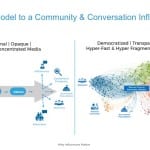
2018: The Year the Community and Conversation Influencer Model Got Real
April 19th, 2018 by Steve GoldsteinBringing together people who share common concerns and interests while putting a brand’s immediate needs in the background—or, even better, on the moon—is easier said than done. But maybe that’s what we really mean when we talk about authenticity in communications and community-building—a willingness on the part of a brand to be quiet about itself and encourage others to do the talking.

How Southwest Communicated News and Empathy in the Aftermath of Flight 1380
April 18th, 2018 by Seth ArensteinAs communicators know, crisis communication begins well before a crisis occurs. Southwest’s communicators demonstrated they were prepared for April 17’s fatal incident aboard flight 1380 from NY to Dallas. Beyond their technical competence, Southwest used several tactics to inject a human touch in its crisis communications.

Starbucks Doubles Down on Its Philly Incident Apology
April 18th, 2018 by Hayley JenningsStarbucks has had a rough week after an issue of racial discrimination at one of its stores in Philadelphia led to national headlines. In response, the company has gone beyond the traditional CEO apology and announced that it will close more than 8,000 stores across the U.S. for one day for antibias training among its employees.