

This week's roundup covers what the latest Reputation Risk Index means for communicators navigating an increasingly interconnected threat landscape focusing on the Iran war, what Tony Romo's OWI arrest and CBS's silence can teach brands about crisis response, and what a round little raccoon from Seattle, named Jimothy, is teaching brands about the value of showing up fast.
Tony Romo's OWI Arrest Is a Crisis Communications Case Study in the Making
What happened: In the age of TMZ and mini cameras everywhere, making a mistake as a public figure is impossible to hide.
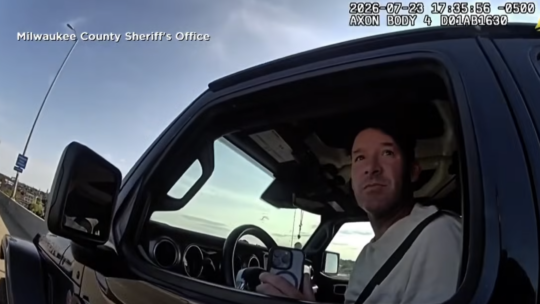
CBS Sports NFL analyst and former Dallas Cowboys quarterback Tony Romo was arrested on July 23 in Milwaukee on suspicion of operating while intoxicated (OWI). Police officers pulled him over on Interstate 43 and reported him as performing poorly on field sobriety tests.
Additional details have since emerged: police also cited Romo for unsafe driving during rush hour and having an open container of alcohol on the passenger door of his vehicle. Body camera footage released by the Milwaukee County Sheriff's Office shows Romo refusing a breath test, telling the officer "We're not doing that. I've heard from all the lawyers don't ever do that."
Romo's court date is set for September 21. He has not yet issued a public statement.
CBS has declined to comment. The silence from both Romo and the network arrives at a complicated moment: the arrest comes just weeks before the start of the 2026 NFL season, with Romo expected to call the Buffalo Bills-Houston Texans week one game alongside veteran CBS analyst Jim Nantz. It also lands in an offseason where Romo's on-air performance has been questioned repeatedly, even though Romo has been somewhat of a fan darling over his tenure with the network.
Communication takeaways: The case presents two parallel crisis tracks worth watching. For Romo personally, the absence of any statement—combined with the release of body camera footage and accumulating details—means the narrative is being written entirely by others. A personal acknowledgment, however brief, typically performs better than sustained silence when footage is already public.
For CBS, "no comment" is a defensible short-term position, but with the season opener weeks away and a court date set during the season, the network will eventually need a clearer position. How both handle the next few weeks will be instructive.
Jenny Wang, SVP at The Colab, says Romo started out in the right direction by self-reporting the arrest to CBS immediately. Sources say this is why his job is not at risk. However, Wang acknowledges the issue of complete silence, which allows the crisis to spiral.
"A week in, there's still no statement from Romo or CBS, so the story keeps getting rewritten by leaked bodycam footage and new citations," she says. "Each drip resets the news cycle, making the story go even more viral."
Overall, Wang says, there's more work to do in order to regain narrative control.
"Self-reporting fast garners internal trust, but it doesn't replace a public statement," she says. "Silence isn't neutral, and that vacuum will be filled by others."
War in Iran: Top Issue Impacting U.S. Brands
What happened: The war in Iran is not only affecting gas prices and ruffling consumers, it's also, currently, the greatest reputational threat to businesses and organizations.
According to the Global Situation Room's Q2 2026 Reputation Risk Index, which synthesizes the views of communications leaders, academics and former diplomats, the ongoing war has eclipsed artificial intelligence and President Trump as the greatest reputational threat facing brands. Fifty-four percent of council members ranked the Iran war a nine or higher on a 10-point scale—a signal of how quickly a geopolitical concern has become a board-level business reality.
The risk goes beyond economics. Unreliable supply chains, increased costs, consumer frustration over prices and executive paralysis on key decisions around hiring and investment are all compounding the damage. But the report identifies a distinct geopolitical reputational layer that sets this apart from a typical economic crisis: American companies are facing backlash from countries that blame Washington for damage to their own economies, straining relationships with traditional allies in ways that will outlast the conflict itself.
"War is taking a heavy toll on the reliability, affordability and political exposure of brands," says Isabel Guzman, Chair of the Global Risk Advisory Council and former head of the U.S. Small Business Administration. "While there is considerable focus on the immediate changes and costs, we are starting to get a clearer picture of how it is impacting the market share and strength."
Communication takeaways: Any crisis can get extremely complicated when the risks begin to pile up. And with the war, Guzman notes that the clearest signal in this quarter's Index is that reputational risks have stopped arriving one at a time.
"A war half a world away is now driving cyberattacks, accelerating fraud and forcing companies to take public positions they never planned to take," she says.
For many PR teams, leaders, brands and organizations, this just goes to show that a singular playbook for separate crisis may no longer work.
"The teams that will hold up are the ones treating reputation as a single connected system and preparing before the crisis finds them," Guzman says.
Hot Jimothy Summer: What Brands Can Learn From a Viral Seattle Raccoon
What happened: Jimothy first appeared near a Goodwill store in Seattle, where a local resident spotted him on July 13 and posted a video to social media. The video quickly earned millions of views because of Jimothy's unusual, shortened shape — the apparent result of short spine syndrome, a rare congenital condition that causes the spine to fail to develop properly in utero, leaving animals with normal limb length but a significantly compressed body.
View this post on Instagram
Within days, Jimothy reached celebrity status: Major League Baseball's Seattle Mariners posted a photo of him wearing a team cap, a city council member launched a Jimothy-inspired art competition, fans got tattoos, and a Jimothy-themed rave was planned for July 26.
Brands moved quickly. According to Sprout Social data, the results speak for themselves:
- Roku's TikTok post showing Jimothy in Roku City earned over 269K likes and a 168% engagement rate (versus a 5.92% average).
- Burger King's two posts on X (here and here) each saw a 38x engagement lift compared to the brand's typical performance on the platform.
- Jimmy John's Instagram post—"us Jimothys gotta stick together"—hit a 5.51% engagement rate against a 0.82% average.
- Canva leveraged the moment on Instagram to showcase its product, earning over 617,000 views.
- Goodyear's X post—"If Jimothy is crossing the road, your tires better be able to stop"—hit nearly 18% engagement versus a 1.38% average.
Communications takeaways: Jumping on a viral trend can pose a risk if the timing or tone is not right. However, brands that broke through during this lighthearted moment weren't the ones with the biggest budgets — they were the ones that moved fast, kept it simple and let the moment do the work. Roku put Jimothy in their screensaver world. Jimmy John's leaned into a name pun. Goodyear made a product-relevant joke that landed. None of it required a campaign brief.
For communicators, Jimothy is a useful reminder that cultural moments don't wait for approval cycles — and that the brands with the clearest real-time playbooks are the ones that show up when it counts.
Curtis Midkiff, Jr., Director of Social Marketing, Sprout Social, says viral culture can move at lightspeed, but the brands seeing massive lift from moments like "Jimothy" aren't just jumping on trends for the sake of it.
"Our research shows that it can backfire," Midkiff says. "The brands that find an authentic angle — whether that's a clever brand tie-in or product integration, or quick-witted banter that's consistent with a brand's voice — can drive staggering earned media value and engagement that outperforms traditional campaigns. And treating audience conversations as real-time intelligence allows [communicators] to spot emerging trends early and convert fleeting internet moments into lasting brand affinity."
Nicole Schuman is Managing Editor at PRNEWS.