

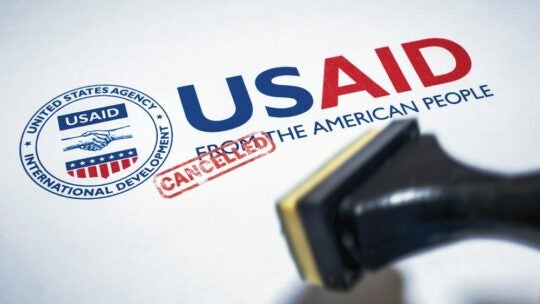
Global health organizations are facing a difficult communications challenge. With the dismantling of USAID, the largest single source of global humanitarian and development funding, non-profits that once relied on government support are competing for individual donor support. As a result, organizations now face increasing pressure to build new donor pipelines, which isn’t as straightforward. Before people can feel inspired to give, they need to understand the problem, connect with it and see how they can help solve it.
This is the real challenge. And many organizations have had to confront it. When you are asking people to support something they don't identify with, no amount of marketing or fundraising activity closes the gap. Realizing this taught us something communications leaders across the global health sector should know: you have to challenge perceptions before you change behaviors. Perception becomes the precondition for every other part of the strategy to work.
When Awareness is Not the Problem
For our non-profit organization, the work focuses on the urgent need for plastic and reconstructive surgical care in low-income countries. When we researched how people understood our work, a huge disconnect became apparent. The problem wasn’t that people weren’t willing to give—in the U.S., for example, Oxfam's 2025 polling found that 95% of interviewees believed the country should spend more on global relief—the issue was that they did not understand the scope and urgency of what they're being asked to support.
This felt like more than a misunderstanding. It was a challenge other charities may be facing without even realizing it. Think about hospice charities where ‘palliative’ is understood as ‘giving up’, when so much of the work is about helping people live well for longer. This is a perception problem, and only real education will help others understand it.
For instance, ReSurge International found that “plastic surgery” was culturally synonymous with cosmetic enhancements. Rarely do people in high-income countries think about patients in low-income countries with burns, trauma or congenital conditions and how crucial reconstructive surgery is for restoring mobility and dignity.
With a staggering global gap of 5 billion people unable to access safe, timely and affordable surgical care, we needed to change how they viewed reconstructive surgery as a whole. In response, we developed a communications campaign focused on dismantling and confronting pre-existing misconceptions head-on and focusing on real patient stories and lived experience.
Closing the Gap
Developed pro bono with Ogilvy Health and Papaya Films, the Closing the Gap campaign challenged these misconceptions. The results produced a 227% increase in new donors and a 490% increase in new donor revenue during the campaign period. Since then, new donor growth has more than quadrupled. The campaign also earned recognition at the Effie Awards and Clio Awards for its effectiveness.
Not every organization needs a huge budget and a big creative campaign. ReSurge got creative and media provided donations. The takeaway is to spend more time understanding the perception gap between an audience and the action the brand wants them to take to ignite change. What are people's current understanding of the matter at hand? What do they get wrong and what assumptions do they hold?
If people don’t understand why something matters, increasing fundraising efforts alone won’t help. Sometimes, the most impactful marketing strategy starts by taking a step back. Measure behavior, not just awareness. Impressions can tell you if people saw something, but it doesn’t tell you whether what they saw made them care enough to act.
Perception is Part of the Strategy
Marketing and communications in the non-profit sector can be challenging. We’re often asked to quickly deliver results, with limited budgets, for huge global issues—all making perception work easy to deprioritize. It is far harder to attribute than a donation, and it can take much longer to show results.
But when misunderstanding stands between an organization and the people it needs to reach, perception is where the real work matters. For global health organizations navigating a new funding reality, this understanding may be one of the most important communications investments we can make.
Anna Santos is Chief Marketing Officer at ReSurge International.