

This week’s roundup covers what Josh Earnest’s WSJ CMO Council Summit conversation reveals about managing crises when you don’t have all the answers, new Muck Rack data showing that most PR professionals are reporting metrics they don’t fully believe in and how the Farmlink Project is turning a sample sale space into a pop-up apple orchard—and a conversation about food insecurity—on Nov. 24.
What United Airlines Focused on During the FAA Outage
What happened: At the WSJ CMO Council Summit in New York City this week, Josh Earnest—former Obama White House press secretary and now EVP of Communications and Advertising at United Airlines—discussed trust, crisis communications and brand loyalty. Earnest took the hot seat during a timely news cycle for the airlines: United had just navigated two back-to-back outages.
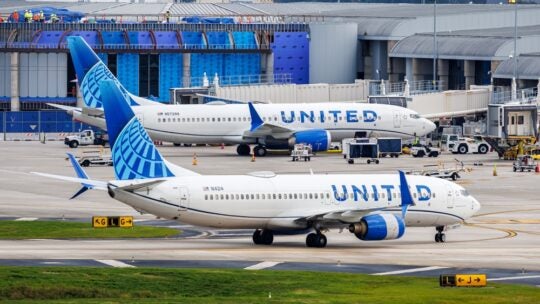
On the Nov. 13 FAA groundstop that canceled roughly 1,800 flights, Earnest said the team focused on one thing: giving customers control instead of trying to answer the questions as to what was happening. That meant refunds, waived change fees and leaning on the airline’s app to get information out fast. United’s virtual Emergency Operations Council—with representatives from across the company including crew scheduling, safety and communications—served as the war room.
The United-specific outage the following Monday was smaller (120 delayed flights, none canceled) but landed in a serendipitous news cycle.
“There was a vortex swirling from the Microsoft Outlook outage to the FAA grounding, and we got sucked into that vortex,” Earnest said. “That’s how you end up with national news stories about a (90-minute) outage that really only affects 120 flights.”
He also addressed United’s recent decision to block unauthorized third-party AI agents from booking flights, citing unresolved issues around data privacy, FAA regulations and the ability to serve customers safely and directly.
“Is there a world where agents eventually help people interact with United Airlines? Absolutely, that day is coming,” he said. “But as it’s currently structured, there are too many problems.”
Communication takeaways: Earnest’s conversation offers useful tips for any communicator navigating high-stakes moments: the job isn’t to have all the answers—it’s to manage the tension between transparency and uncertainty. During the industrywide FAA outage, his team made a deliberate choice to ignore the social media noise and focus on what they could control: direct, empowering communication with customers.
On crisis response, Earnest puts it plainly.
“There’s an innate tension between ‘I don’t have all the information I need’ and ‘tell me now what’s going on, what are you hiding,’” he says. “The ability to effectively manage that tension is the essence of managing a crisis.”
Employee communications is another area where Earnest says the conventional wisdom undersells the work. At United, keeping a globally distributed workforce of 120,000 people informed and aligned isn’t just an HR function—it’s a brand function. The airline’s informal program of giving employees with large social followings early access to events and announcements is a direct expression of that philosophy.
“Having somebody say ‘I work at United Airlines and I love my job’ is actually a really good endorsement of the brand,” Earnest says. “It requires some tolerance for risk—we’re not approving or signing off on posts—but it is an opportunity for people to communicate in an authentic way.”
For communicators still navigating the question of whether comms and marketing should operate separately, Earnest’s experience at United makes the case for integration. The benefit, he says, isn’t just strategic alignment—it’s speed.
“A lot of organizations spend a lot of energy figuring out who’s in the lead,” he says. “In a world where these teams work together every single day, that question doesn’t come up. Our team is in the lead—and it allows us to be more nimble, more creative and frankly more efficient.”
New Muck Rack Data: PR Pros Are Measuring LLM Visibility—But Reporting Metrics They Don’t Trust
What happened: Muck Rack’s 2026 State of PR Measurement report finds the profession navigating a familiar issue: measurement is evolving fast, but the metrics being reported don’t always reflect what practitioners believe is meaningful data. The report surveyed PR professionals on AI adoption, LLM visibility measurement and the ongoing challenge of connecting PR work to business outcomes.
Key findings:
- 55% of PR professionals have taken steps to measure LLM visibility, up from 28% last year
- Among teams measuring LLM visibility, 37% assign primary responsibility to PR or communications and 19% to SEO or digital
- 54% of PR professionals use AI or AI-powered tools in measurement and reporting
- 63% must report metrics they don’t consider meaningful or reliable at least sometimes—with client expectations cited as the top reason (38%)
That last number is worth focusing on. Nearly two-thirds of PR professionals are regularly reporting metrics they themselves don’t fully trust—not because of a lack of better options, but because of external pressure to show up with numbers. For communicators making the case for more meaningful measurement internally, that figure is a useful data point: the gap between what gets reported and what actually reflects impact is wide, and it’s not a secret inside the profession.
Communication Takeaways: The LLM visibility data continues a trend covered in this roundup throughout the year—GEO is no longer a niche concern. With more than half of PR teams now actively measuring how their brands appear in AI-generated answers, the question is no longer whether to track it, but who owns it and how.
Raina Lazarova, Muck Rack’s VP of Global Insights, says PR pros should not wait for the perfect framework—the most important thing to do is just start.
“Build a set of prompts that reflect what your audience actually asks—you can even use AI to help—and test them regularly, like any other PR metric,” Lazarova says. “Then pressure-test what you find. Are you testing across more than one platform? Can you tie the results to traffic or other outcomes leadership cares about? You don’t have to be a data scientist to measure well.”
Sample Sale or Indoor Orchard? Farmlink Is Giving Away 35,000 Apples in Manhattan
What happened: The Farmlink Project and 260 Sample Sale are transforming 261 Fifth Avenue into a free pop-up apple orchard on Tues., Nov. 24—giving away 35,000 farm-fresh apples, enough for roughly 3,000 families. The event will highlight how moving surplus produce can help address food insecurity.
Kate Nelson, Head of Brand Partnerships and Founding Member of The Farmlink Project, says the idea is pretty simple and connected fashion to food.
“New Yorkers know 260 Sample Sale as a place to go for overstock fashion, but surplus exists in food too, and too much of it never reaches the people who need it most,” she says. “The Farmlink Project exists to move surplus produce from farms to families in need.”
The activation is now in its second year. The national nonprofit has delivered more than 500 million pounds of fresh food since 2020, and uses events like this to demonstrate its core model: connecting farms with surplus produce to food banks and community organizations nationwide.
Communication Takeaways: The Farmlink pop-up is worth noting as a cause marketing activation that earns its keep. Rather than a standard donation announcement or a branded social campaign, it creates a physical experience that makes the food rescue mission tangible—and gives multiple brand partners (260 Sample Sale, Sweetgreen and Levi’s) a natural, non-forced role.
Nelson says the activation in the middle of Manhattan creates a spectacle for the nonprofit, but also provides during a busy holiday season.
“It lets us celebrate bringing fresh fruit to thousands of people right before a holiday centered on food and abundance,” she says. “Last year the event was a huge success—over 4,000 people lined up around the block—so we knew we had to bring it back.”
She notes that creative pop-ups can not only bring a brand’s mission to life, but give people the opportunity to connect with each other.
“With our pop-up apple orchard, the free element draws people in, and then gives us the chance to open a conversation about food surplus and what we can do about it.”
Nicole Schuman is Managing Editor at PRNEWS.