

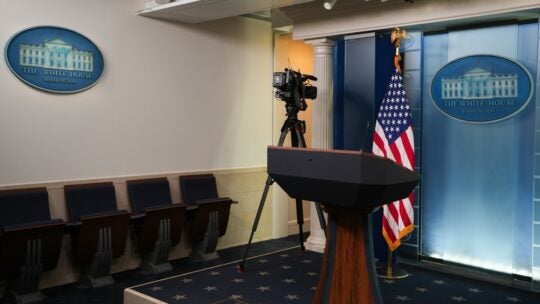
For almost a week, reporters from CNN, MS NOW and Politico were shut out of the White House. Judge Timothy Kelly ordered their access restored while the case continues.
Most communications professionals read that as a press freedom debate. But it also raises a timely yet important question: Who counts as “media” in 2026?
The Media Landscape has Changed
For decades, communications and public relations practitioners operated within clear lines: “top-tier” media included national publications and broadcast networks, “mid-tier” consisted of trade outlets and “low-tier” was everything else outside of those parameters. PR teams knew who the reporters were, built relationships with them and structured their media strategies accordingly.
However, social media increasingly blurred those lines. According to The Reuters Institute's 2026 Digital News Report, audiences now heavily rely on creators and influencers on social media for their news. As audiences move, the people informing them are changing, too.
Today, the person shaping an audience's understanding of a story might be a journalist at a major news organization, but, they might also be an independent journalist publishing on Substack, a podcast host, a subject-matter expert with a significant social following or a social-first creator explaining the news directly to millions of people on TikTok, Instagram or YouTube.
Audiences have changed where and how they consume information. The approach to media relations has to change with them too.
The Ecosystem Needs Both
For comms professionals, the challenge shouldn't be deciding whether journalists or creators deserve a slice of the news pie. It's determining who is doing credible work, reaching a relevant audience and contributing meaningfully to the conversation.
“Creator” itself is also a catch-all term. Someone making sponsored lifestyle content and an independent journalist explaining a breaking news story on TikTok may technically fall under the same label, but they shouldn't necessarily be treated the same way by a communications team. Creators are one piece of a much broader media ecosystem that now includes traditional reporters, independent journalists, newsletter writers, podcasters and subject-matter experts.
Traditional journalism remains essential to that ecosystem. The reporting, verification practices and institutional expertise of established newsrooms aren't suddenly obsolete because audiences are consuming more information through individuals. In fact, many of the best creators covering news build on the original reporting traditional media produces.
The question isn't which model wins. It's how they work alongside one another. All parts of the ecosystem are required and in the instance of the White House, when traditional press access gets cut off, everyone suffers.
Stop Defining Media by Platform
Working for an established publication doesn't automatically make every piece of reporting rigorous, just as publishing independently or primarily on social media doesn't automatically make someone less credible. Instead, communications teams should evaluate the person and the work behind the coverage:
- Do they show where their information comes from?
- Do they correct mistakes publicly?
- Do they have expertise or a track record covering the subject?
- Are commercial relationships clearly separated from their reporting?
These questions are becoming even more important as generative AI makes it easier to create convincing content at scale. Earlier this month, YouTube removed a network of channels that paid actors to read AI-generated political scripts.
That means PR professionals need better criteria for evaluating credibility rather than relying on the platform someone uses or the title attached to their work.
Rethink Who Gets Access
Creators and independent journalists often need exactly what traditional reporters need to produce accurate coverage: reliable information, context, data, access to experts and time to ask questions. So, give credible voices the tools they need to get the story right: a fact pack, access to an expert and, when appropriate, a clear embargo window.
Now, that doesn't mean putting every person with a social following on a press list. It means developing better criteria for deciding who belongs in the room.
There is a growing group of creators and independent voices who want to cover current events responsibly and are actively looking for better information and resources.
Traditional news organizations can play an important role here, too, by making reporting and verification resources more accessible. The Recount, for example, built a Creators Voter Guide so creators can see what candidates are actually saying on the issues their audiences care about.
The goal isn't to turn creators into traditional reporters, but rather to give people covering consequential topics better tools to do their work.
Your Media List Should Reflect how Your Target Audience Consumes Information
For PR professionals, the biggest practical takeaway is that your traditional media list is expanding.
Just as strong PR professionals spend years building trust with reporters, they should identify credible emerging voices on other platforms early, understand what they cover and develop relationships before they need anything from them.
That requires more than adding a new “creator” tab to a media database. It requires continually asking: Who is actually informing our audience, and does our media strategy reflect that reality?
The debate over whether creators should be considered journalists isn't going away. But for communications professionals, it may also be the wrong question.
The press corps will keep changing, regardless of what happens in any individual courtroom or newsroom. The PR teams that adapt won't build their relationships around titles or platforms. They'll build them around rigor, relevance and trust, wherever they live.
Ramin Beheshti is CEO and Co-founder at Caliber.