

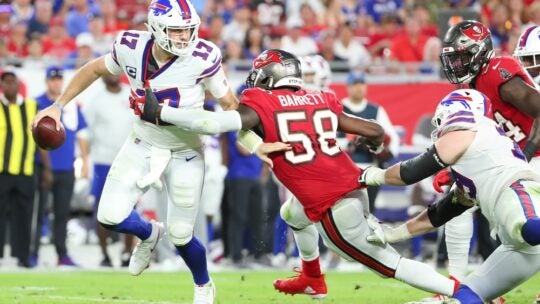
In many respects, the Buffalo Bills are already the NFL’s team of the 2020s. Since the dawn of the decade, no team has scored more points, given up fewer points or won more games. For all of the team's success, however, the Bills have yet to capture their first Super Bowl championship.
Time will tell whether the team’s decision to dismiss Head Coach Sean McDermott finally gets them over the hump in 2026. What is already clear, however, is that the front office's repeated missteps in handling such a high-profile personnel change serve as a critical case study for PR practitioners across industries.
Shocking Personnel Changes
High-profile personnel changes are not a crisis in themselves, but they can quickly become one when not managed correctly. The Bills demonstrated this throughout the past week. McDermott’s firing itself was a shock. In his nine years leading the team, the Bills missed the playoffs only once, ending a 17-season drought that had preceded his arrival in 2017.
His success, despite falling short of a Lombardi Trophy, had restored confidence in a franchise that had been defined by the stigma of a declining local economy, the NFL's longest active postseason drought, four straight Super Bowl losses, the Music City Miracle and the notoriety of former player O.J. Simpson. For the first time in a long time, fans felt good about Buffalo. The team sold out of personal seat licenses for its new stadium and sent off their old one in style. Even after the team's most recent playoff loss to Denver, the future still seemed bright.
Then came the news. The Monday morning after the playoff loss, the NFL Network broke the story that the Bills had fired McDermott. A series of unforced errors followed that have put the Bills brand in a hole of its own making.
Mistakes at Every Step
First, players had already left the team facility when the news broke. They were understandably caught off guard and, in the absence of messaging guidance, began criticizing the organization anonymously and publicly.
The team then issued a tone-deaf press release. The quote from Team Owner Terry Pegula failed to express respect and appreciation for McDermott, and worse, announced the promotion of General Manager Brandon Beane, who many fans blamed for the team's lack of postseason success due to his failure to recruit and retain impactful players.
The statement also included a crucial typo ("admirally" instead of "admirably"), suggesting a rushed, unprepared communication.
The errors continued. It took 30 hours for the team to post a McDermott thank you video, which deepened fan frustration—one online poll conducted by Buffalo’s CBS affiliate showed 94% of viewers opposed the firing.
In an effort to turn the page, Pegula and Beane met the press that Wednesday morning. What transpired made things even worse. Pegula was widely derided for criticizing a player still on the team's roster, and seemed to blame McDermott for drafting him, while video existed showing that Beane supported the pick. Pegula also suggested he made the decision to fire McDermott in the heat of the moment after the team's playoff loss to Denver. This explanation raised questions about whether the next Head Coach would be similarly subject to the mercurial whims of a meddling team owner.
For the past week, the Bills conducted a search for a new Head Coach at a time when their own errors have hurt their brand with fans, current players, potential free agents, agents, sponsors and even the coaches they interviewed.
Today, the team promoted their current offensive coordinator, Joe Brady, to be their next Head Coach. Brady, who worked under McDermott for the past four years, represents a continuation of the current regime, rather than the fresh start that Pegula seemed to be pursuing when he removed McDermott. It's unlikely that fans will quickly embrace this decision as the right move, and the team's PR challenges are likely to continue.
Lessons from Buffalo
-
Prepare a Crisis Playbook for Personnel Changes: Communications staff must prepare a crisis playbook for high-profile personnel changes. The Bills could have mitigated much of the damage with a pre-approved, proofread statement, a tribute video ready to go and an immediate press conference. Attacking a crisis head-on and getting the message out quickly is essential for protecting reputation.
-
Equip Personnel with Guidance: Employees, especially public figures, need message guidance before news breaks to ensure they know what to say, preventing the perception of an organization in disarray—a failure demonstrated when players began speaking to reporters and posting on social media.
-
Handle Crises with Care and Control: Organizations must handle every crisis with care, using only appropriately prepared and media-trained spokespeople. While Pegula, as the owner, had to speak, his missteps, criticisms, and insistence on interjecting ultimately did more harm than good in the public eye.
-
Know Your Audience: McDermott was a beloved coach who, in many fans’ eyes, had turned a long-suffering franchise around, developed a bona fide star in quarterback Josh Allen, and seemingly put the team on a path to greatness. It’s one thing to make a personnel decision, it’s a business after all. But it’s another thing to make it so haphazardly, clearly showing a lack of vision, a lack of authenticity, and a lack of concern for key stakeholders like fans.
The Bills’ week of misfires provides stark, real-world instruction for public relations professionals. The failure was not necessarily in the decision to fire their coach, but in their total breakdown of crisis communication protocols.
A prepared playbook, a unified message, and disciplined spokespeople can transform a potentially negative, but manageable, announcement into a professional pivot toward the future. The Buffalo Bills demonstrated the opposite: that a lack of preparation can allow the narrative to be seized by external critics, players and an infuriated fanbase.
In today’s media ecosystem, where information and reaction are instantaneous, the margin for error in managing major news is zero. The Bills' self-inflicted wounds will now cost them not only public goodwill but potentially the talent required to finally win the Super Bowl that has eluded them for far too long.
Rich Luchette is Senior Vice President, Communications at Precision Strategies.