

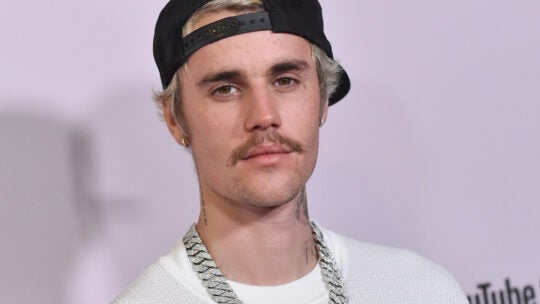
This week’s PR Roundup looks at a new credentialing push to professionalize influencer and creator marketing, Justin Bieber stealing the Coachella conversation and troubling new data for philanthropy's reputation.
Creator Certification Program Launches
What happened: The creator economy is getting its own version of a professional badge of honor. The Institute for Responsible Influence (IRI) recently launched a new Responsible Influence Certification Program designed to raise transparency and accountability standards across influencer marketing. Backed by a coalition that includes major platforms, agencies and trade groups, the program introduces a certification seal for creators who complete training grounded in FTC Endorsement Guides and advertising standards.
Francis Stones, Global Head of Brand Safety at TikTok, says the launch of the training demonstrates the industry’s commitment to responsible, transparent creator programming.
"Creators are the lifeblood of TikTok, and we’re proud to partner with the Center for Industry Self-Regulation and IRI on an initiative that raises standards across the marketplace,” Stones says. “Creators who complete IRI training give brands confidence that they understand advertising standards, supporting a safer, healthier advertising ecosystem for both brands and consumers."
Creators who complete the 90-minute video-based curriculum (which focuses on responsible brand partnerships, disclosure requirements and truth-in-advertising practices) and pass the assessment receive the IRI’s Certification Seal, signaling training in truthful and transparent digital influence. Certified Creators gain access to ongoing resources and will be included in a searchable database, making it easier for brands to discover and connect with trained creators.
As influencer communications continue to scale—now a $37 billion market with the majority of U.S. marketers working with paid creators—trust remains a challenge. While many consumers say creator recommendations influence purchasing decisions, relatively few fully trust influencer content, particularly when disclosures are unclear. Programs like this signal a growing industry interest in self-regulation and standardization, offering brands a potential safeguard against compliance missteps and reputational risk.
Communication takeaways: For communications and marketing teams, the launch reflects a broader shift toward legitimatizing the creator ecosystem. Expect certification, disclosure training and platform accountability to become increasingly important factors in creator vetting and partnerships as brands seek to balance reach with credibility.
Eric D. Reicin, President and CEO of BBB National Programs and the Center for Industry Self-Regulation, says certified creators signal to brands and consumers a professional commitment to creating content that meets the highest standards of honesty, accountability and transparency.
“Consistent with our mission, the program will unite creators, brands and platforms to raise industry standards and demonstrate how voluntary, self-regulatory frameworks can strengthen trust,” Reicin says.
Priscila Martinez, Founder of The Brand Agency, who works extensively with creators and influencers, says complying with FTC standards is not a new problem, but what is new is that a group of well-known brands and a popular social media platform is working together to figure out a solution. However, she notes, while educating creators is important, it may not create the large impact many are hoping for.
Martinez says, in her experience, this may be beneficial to early-career creators and smaller brands, but not necessarily established influencers and creators.
“Brands will be hard-pressed to find high-follower-count creators willing to take and complete the course,” she says. “Established creators with management teams and lawyers aren't incentivized to spend time on something like a course. A lot of the larger brands have established relationships with creators, and they are highly unlikely to knock them off the roster if they don't complete a course.”
She does note that micro influencers and UGC content providers could be the highest benefactors.
“Something as simple as a course can signal to brands that they will abide by all rules,” she says. “I think this will mostly be beneficial to creators starting out in their career and for smaller brands who don't have in-house social media teams whose job is to ensure all paid and gifted creators abide by FTC guidelines.”
Bieber Dominates the Desert
What happened: Call it Bieb-chella. According to new Meltwater data, Justin Bieber didn’t just show up at Coachella last weekend—he took over the conversation. The pop star fueled a sentimental-heavy social media surge, generating 486K total posts and 340M engagements, dominating nearly a third of all Weekend One chatter.
The biggest driver? Pure nostalgia. Social feeds lit up with references to Bieber’s early-era hits and “inner Belieber” memories, turning his appearance into less of a performance and more of a comeback storyline fans were eager to celebrate—and debate. In fact, reactions to Bieber were more polarized than the broader Coachella conversation, with both praise and criticism running hotter than average.
Meanwhile, other performers carved out their own social niches. Sabrina Carpenter generated strong buzz—especially from news coverage—while Karol G made history as the first Latina woman to headline Coachella and earned the most positive social sentiment overall.
Key findings:
- Bieber accounted for nearly 30% of all festival chatter, cementing his unofficial headliner status online.
- Nostalgia ruled the conversation, with fans referencing early hits and reliving “inner Belieber” moments.
- Sentiment around Bieber was more polarized than the overall festival tone:
- Neutral: 44.7% (down 3.9pp)
- Positive: 35.1% (+0.5pp)
- Negative: 18.3% (+2.3pp)
Communication takeaways: If there’s a lesson here for communicators, it’s that cultural moments aren’t just about who headlines—it’s about who sparks emotion. Nostalgia, fandom and real-time reactions are driving engagement.
For brands looking to ride cultural waves, the biggest impact may come from tapping into emotional memory—not just visibility. Because as Coachella showed this year, sometimes the loudest moment isn’t the main act—it’s fan memories.
Alexandra Bjertnæs, Chief Strategy Officer at Meltwater, says with a third of the entire festival conversation and engagement concentrated on one artist, it’s clear Beiber’s return to the stage resonated on that emotional level.
“It wasn’t about polished Hollywood production, it was raw and real, something fans could actually connect to,” Bjertnæs says. “Because at the core, it was a comeback story, and the successful ones are genuine—not manufactured. Sometimes the most effective strategy is not creating a spectacle but returning to an origin story, tapping into emotional memory and giving people something to feel again.”
Waning Trust and Other Risks Facing Philanthropy
What happened: A new Reputation Risk Index issued by Global Situation Room is putting philanthropy under the microscope, and the findings aren’t flattering. The report suggests the sector is struggling to hold its ground amid political pressure, with many organizations seen as backing down too quickly when challenged. More than half of global public affairs leaders say philanthropy has made too many concessions in recent months—raising concerns about long-term damage to credibility and its ability to stay focused on mission-driven work.
At the same time, the sector’s communications gap is becoming harder to ignore. Traditionally low-profile by design, many philanthropic organizations are now finding themselves in the spotlight without the messaging infrastructure—or instinct—to respond effectively when narratives turn negative. Add in growing scrutiny over donor relationships and the rise of AI-generated content, and the reputational pressure is only intensifying.
AI, in particular, is emerging as a defining risk factor. The report highlights everything from fake charity websites siphoning donations during disaster response efforts to criticism of AI-generated “poverty porn,” which some say crosses ethical lines in storytelling and fundraising.
Key findings include:
- 52% of global public affairs leaders say philanthropy has made too many concessions under political pressure, risking long-term reputational harm.
- 87% say the sector is not communicating effectively enough about its impact or work.
- AI misuse is the No. 1 reputational risk for the second straight quarter, driven by deepfakes, misinformation and manipulated content.
- Political targeting—particularly criticism or pressure linked to Donald Trump—ranks as the No. 2 risk, underscoring how quickly politics is shaping reputation strategy.
- Looking ahead, leaders are watching global conflict, supply chain instability and online child safety regulation as the next reputation concerns.
Communication takeaways: Philanthropy is running into the same reality many industries are facing: reputation risk is no longer a one-off—it’s constant, fast-moving and increasingly shaped by politics and AI. For communicators, the expectation is shifting from passive storytelling to active narrative defense, often in real time.
Whether in nonprofit or corporate comms, the bar has moved. Silence or slow response isn’t neutral anymore—it’s risky. Organizations that can clearly articulate their mission, defend their decisions, and respond quickly in moments of crisis are the ones most likely to maintain trust in an increasingly skeptical environment.
Isabel Guzman, Chair of the Global Risk Advisory Council and former Administrator of the U.S. Small Business Administration says foundations are finding their core missions, from climate change to DEI programs, weaponized against them—and all at a time when AI advances rapidly and federal funding for social safety net programs is being cut.”
"In order for organizations to fortify against reputational risks in 2026, they must bridge the gap between their stated values and the realities of operating in a highly politicized, AI-driven world,” Guzman says.
Nicole Schuman is Managing Editor at PRNEWS.