

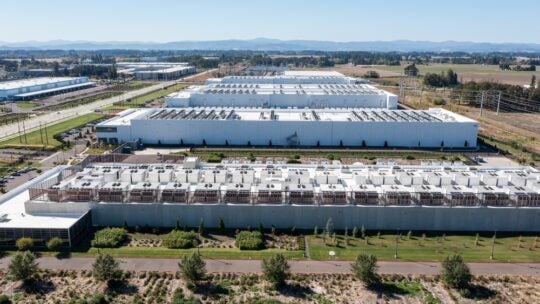
Imagine waking up one morning to the hum of massive cooling fans, construction trucks crowding the roads, and a new industrial complex rising nearby, without ever being told why. You’d have questions, and rightly so.
If local leaders never explained the project, or how residents might benefit from it, those questions could also be served with a heaping side of outrage.
Surprises are great for anniversaries or birthdays, but that’s about it. Too often, data center developers (and those who communicate on their behalf) assume goodwill will automatically follow investment. But in 2025, that assumption failed, and those surprises were found for many to be unwelcome and annoying.
Across the country, new data center proposals are sparking fierce local opposition. In Virginia, Diode Ventures recently scrapped plans for a 515-acre data center campus in Charles City County after residents objected to noise, light pollution, and what they saw as a lack of transparency. Similarly, Amazon Web Services pulled back a 1,370-acre project in Louisa County following community pushback over water usage, rural character and oversight concerns.
These negative flashpoints share a common theme, specifically when residents feel left out of the conversation. They worry about noise, utility strain, water use and environmental degradation, and they often see few tangible local benefits.
While the facts can tell a different story, in the absence of information, citizens' own worst fears can fill in the blanks.
Many companies are now learning the hard way that communicating technical solutions alone isn’t nearly enough. Those wishing to do more than inform, or more specifically, persuade, must also tell a human story, focused on the benefits for the audience.
Communicate Inclusion Not Infrastructure
A well-designed data center can be more than a fortress of servers. It can be a community anchor. In Virginia, data centers generate an estimated $5.5 billion in labor income and support 74,000 jobs statewide. Each direct data center role often multiplies into several indirect positions in construction, maintenance, hospitality and local services.
Yet these success stories rarely reach the communities most affected, at least not until the first bulldozer rolls in. To rebuild trust, the industry must shift from transactional development projects to transparent partnerships with communities.
Communicate Early and Often
Let neighbors know how they will benefit before starting a project. Remind them often and prove it.
- Lead with transparency, not coercion. Before permits are signed or tax abatements granted, communicators should share clear projections for energy, water, noise and traffic impacts.
- Invite independent review. Formalize commitments through community benefit agreements, tools long used in real estate to ensure local hiring, environmental mitigation and education support.
- Tell the local story. Make it real. Name the roads that will be improved, the schools that will receive new connectivity and the training programs that will open doors to local careers. “Economic multipliers” can sound abstract but concrete examples build credibility.
- Elevate shared-value strategies. Collaborate with utilities on heat-reuse projects or microgrid solutions. Partner with schools or health systems to expand digital infrastructure or environmental data networks. Be a civic partner and innovation hub, not a mysterious black box.
- Report results annually. Once operational, track and publish results that include local hires, tax revenue distribution, energy efficiency, emissions and compliance outcomes. Transparency sustains trust long after the ribbon-cutting.
Trust Is the Real Edge
If data centers want to avoid becoming pariahs in their own neighborhoods, developers need to step out from behind the site plans and into community conversations. Be a presence in the community and attend council meetings. Listen to concerns and share the benefits the centers bring such as new water pipes, sewage systems, electricity lines and highway infrastructure.
The real edge is all about trust. Communities that see data centers as partners, not overseers, will anchor them for the long haul.
In 2026 and beyond, success will be measured not only by uptime and capacity, but by credibility. Building a facility is one thing. Building a foundation in legitimacy and trust is as essential first step before breaking ground.
Dan Rene is a strategic communications counselor at Dan Rene Communications. Scott Warner is principal of Warner Strategies, a communications consultancy.