

This week’s PR Roundup highlights how listening, resourcing and talent development are shaping communications. From Dr Pepper’s savvy elevation of a creator’s viral jingle to new data revealing what’s holding PR teams back, we examine how brands and agencies are adapting to shifting media dynamics, AI realities and a changing early-career pipeline.
Dr Pepper Heard the Internet—and Put a Viral Jingle on College Football’s Biggest Stage
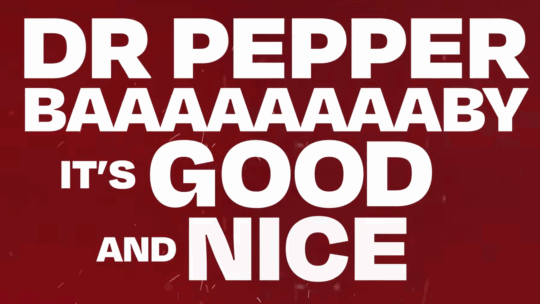
What happened: What started as a playful TikTok ditty quickly became one of the more memorable brand moments of the college football season and a big win for creators in general. In late December, creator Romeo posted a short, homemade jingle—“Dr Pepper baby, it’s good and nice. Doo doo doo”—tagging the soda brand and half-joking about turning it into a collaboration. The simple hook resonated immediately, and has currently racked up almost 60 million views, 6.7 million likes and hundreds of thousands of bookmarks in just weeks.
@romeosshow @Dr Pepper please get back to me with a proposition we can make thousands together. #drpepper #soda #beverage ♬ original sound - Romeo
That buzz didn’t stay confined to the TikTok app. Dr Pepper not only noticed but leaned into the moment, licensing Romeo’s original sound and placing it front and center in a 15-second commercial that aired during the College Football Playoff National Championship on Jan. 19. The spot, titled “Dr Pepper Baby (Good & Nice Jingle) by @Romeosshow,” paired the viral vocals with visual highlights of the brand’s beverages and leaned into the joyful, low-fi energy that helped the jingle catch fire online.
Romeo celebrated with a tongue-in-cheek acceptance speech on TikTok, reinforcing how authentic creator-led content can elevate brand reach when marketers and communicators are willing to let users set the tone.
Communication takeaways: This type of content adaptation feels like a no-brainer. A popular TikTok post about a brand appears, said brand notices and partners with the popular creator, surprising and delighting consumers.
Dayna Castillo, digital marketing strategist and Founder of the “Silence, Brand!” newsletter, says the Dr Pepper story is an obvious win for everyone involved.
“The jingle arrived on Dr. Pepper’s doorstep with social proof,” Castillo says. “The public vouched for the content with views, shares and comments on the original viral post. That kind of endorsement makes for an easy sell to management and removes any doubt about the validity or future success of the influencer collaboration.”
This situation provides a very authentic example of creator success, which brands and consumers both strive for, because Romeo’s emergence was organic, not engineered.
Castillo notes that it’s important for brands to move fast in order to own the moment, but to also beware of copycat strategies and the evolution of “brand baiting.”
“It would benefit marketing and influencer teams to internally streamline their process of how to handle reactive moments before those moments even happen,” she says. “Have a clear plan in place for what the procedure is when a viral moment happens. The time between the original video being posted and Dr Pepper’s acknowledgment on its feed was about 25 days. Romeo dropped another jingle in partnership with Vita Coco 17 days after the Dr Pepper jingle post.”
Creators are now trying to follow that success, with brand baiting filling up social platform feeds, potentially exhausting users’ scrolls.
“Brand baiting is when creators intentionally make content designed to attract a brand’s attention in hopes of recognition, reposts or the big win: paid partnerships,” Castillo says. “If this jingle moment gets picked up by multiple brands in a short amount of time, there’s a risk it will be tarnished by the public thinking the brand is “doing the thing Dr Pepper did.”"
Meltwater State of PR in 2026 Report Shows What Is holding PR Back
What happened: Meltwater and We. Communications recently released the 2026 State of PR report, which surveys more than 1,100 PR and comms pros worldwide to understand the realities, roadblocks and opportunities shaping the industry.
Some of the key findings include:
- Resources are tight, and it’s holding PR back
The number one challenge facing PR professionals? Insufficient resources (24%), followed closely by difficulty measuring impact and ROI (21%) and managing stakeholder expectations (16%). Despite PR’s growing responsibilities, half of those surveyed work on teams of fewer than five people, and over half expect budgets to remain flat in the next year.
- Traditional PR responsibilities still dominate, but social and influencer work is growing
While only 10% say social media is a main function of their role, nearly half manage social media within their organization. Likewise, 36% own influencer strategy, even though only 2.3% view it as a primary responsibility. This shows a clear disconnect: PR teams own more channels than ever, but don’t fully see them as core to their role.
- Media relations is evolving fast
More than 28% of PR pros now pitch journalists zero days per week. Why? The landscape is shifting:
-
- Personal relationships still matter (a top factor in securing coverage)
- But tools and databases now streamline much of the outreach
- LinkedIn is by far the most valuable social platform for PR professionals
- Nuanced concerns about AI
28.6% of communicators worry AI could reduce the need for human talent or weaken PR’s seat at the table, yet 18.5% report no concerns, and (perhaps surprisingly) almost no one cites accuracy as a primary issue.
Communication takeaways: Kelly Costello, Head of Corporate Communications at Meltwater, said the company wanted to give teams a clear, global snapshot of how the industry is evolving and what peers are experiencing with its first State of PR Report.
"The findings are meant to serve as both a benchmark and a roadmap—helping PR leaders refine strategy, metrics and AI adoption so they can demonstrate the impact of their work more clearly and earn a seat at the table," Costello says.
She noted how the study displays that PR professionals are navigating constant disruption—from AI to shifting media dynamics—while still facing long-standing challenges around measurement, resourcing and executive alignment.
'Foster the Future' Provides Diverse Candidates a Solid Agency Foundation
What happened: Just because the current environment for DEI is shaky doesn’t mean it’s not still needed.
A 2022 survey conducted by the Diversity Action Alliance across nearly 20,000 PR and communications organizations in the U.S. found that only 29% of employees were ethnically and racially diverse. Within those organizations' leadership positions, that percentage drops to just 17%.
It’s becoming more difficult for recent college grads in particular to find entry level jobs due to the explosion of AI removing some of those tasks. Programs like Foster the Future are seeking to help young communicators become even more sought-after assets.
The program partners strategic communications agency Mission North with other agency partners and the PRSA Foundation to expand career opportunities for diverse communications professionals. The program is entering its fifth year and applications for the 2026 cohort are now open through Feb. 17, 2026.
This year includes some new shifts:
- A record 12 participating agencies, including four new partners
- A new professional development layer for all Fellows
- An AI-focused training course from Muck Rack
- Leadership and soft-skills training
- Interview prep and job-seeking guidance
Tyler Perry, Co-CEO of Mission North, says she’s seen the ‘multiplier effect’ of the program over since its inception.
“Students leverage their fellowship to secure subsequent internships and full-time industry roles,” Perry says. “For example, Mission North’s 2025 Fellow recently joined Launchsquad as a PR Account Coordinator.”
Communication takeaways: Programs like this are acknowledging an intentional shift in the industry—a moment when agencies are rethinking how they attract, train and retain early-career talent.
“We forge forward [even in a difficult DEI environment] because we’ve seen incredible talent come through this program, and we have partners who not only believe in this mission, but also recognize that a diverse PR industry isn't just a 'nice to have'—it’s a business imperative,” Perry says. “The continued investment from these agencies demonstrates a collective will to ensure the future of communications is more inclusive and equitable.”
She also notes the importance of training young colleagues on emerging technologies, which is why they included the AI training this year.
“While AI is an incredible tool to streamline tedious tasks, it can’t replace original thought or cultural nuance,” Perry says. “We feel a deep responsibility to train the next generation of leaders to use AI strategically and responsibly, without losing their grasp on critical thinking.”
Nicole Schuman is Managing Editor at PRNEWS.