

This week's PR Roundup covers Anthropic's Claude buckling under the weight of its own viral moment, the McDonald's CEO trying to sell America on a new burger and becoming a meme instead, and a new conscious consumerism report quietly dismantles the narrative that sustainability is dead—with a pointed warning for brands that have gone quiet.
Claude's Growing Pains
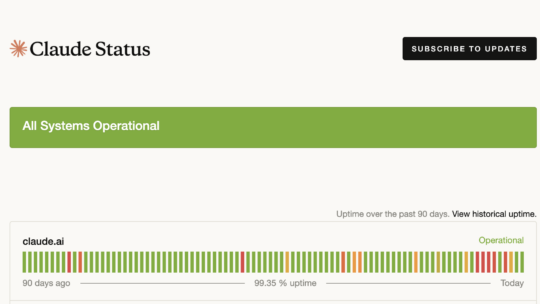
What happened: Yes, even AI has bad days. On Monday, March 2, Anthropic's Claude went dark for several hours after the company cited "unprecedented demand" as the culprit, to the media. Consumer-facing platforms—claude.ai, the mobile apps and Claude Code—all went offline, while businesses using Claude's API through their own integrations were largely unaffected.
The timing was no coincidence: Claude had shot to the top of Apple's App Store free charts following a very public falling out between Anthropic and the Pentagon. After President Donald Trump ordered all government agencies to stop using Anthropic products, and Defense Secretary Pete Hegseth labeled the company a "supply-chain risk to national security," users began flocking to Claude and abandoning ChatGPT (as it was reported that OpenAI had jumped in at the Pentagon after Anthropic bowed out).
The surge in new users strained Claude's login infrastructure, causing failures across the web and mobile apps, with thousands of users flooding Downdetector with complaints at the outage's peak.
When Anthropic restored service, it struck a gracious note, telling CNBC: "Claude is back up and running across claude.ai and our apps. We're grateful to our users as the team works to match the incredible demand we've seen for Claude in recent days."
Communication takeaways: For PR pros, this is a fascinating case study in how a reputational win can almost immediately create an operational crisis—and why the two need to be managed in tandem. The good news: Anthropic's communications response was fast. The company posted its first "investigating" notice within roughly 20 minutes of the outage being flagged and provided regular status updates as engineers worked to isolate the issue. The bad news: A communications gap with the public and where those updates were delivered.
When your brand suddenly becomes a cause, make sure your infrastructure team is looped in just as fast as your social team.
Andrea Gils Monzon, CEO and Founder at Shiftmakers, says software outages happen often, but what doesn’t happen often enough is a communications response that matches that moment.
“Anthropic's status page did its job, but a status page talks to developers,” she says. “It doesn't talk to the thousands of general consumers who had just made a values-driven decision to switch platforms. Those users were on X and Threads and Bluesky and Reddit, not status.claude.com.”
Gils Monzon noted the importance for every AI platform (and any brand with a digital presence) to have a tiered response framework.
“Short outage—limited users should stay on the status page,” she says. “Over 120 minutes during a high-visibility news cycle? You need to post on social. Over three hours with brand implications? You need to email subscribers and post on your owned news channel. The tool itself going down is recoverable, but losing the trust of users who just chose you? That's harder to fix.”
Anthropic learned the hard way that when millions of people depend on a platform, silence will never be a neutral choice. Proactive communication becomes part of the product.
A Small Bite Turns Into a Big Problem for McDonald's
What happened: McDonald's wanted to make some noise with its new Big Arch burger—the burger chain's first new permanent global menu item since the chicken McNugget debuted nationwide in 1983. Instead, CEO Chris Kempczinski went viral and not in the way the brand intended.
Kempczinski posted a video to his Instagram account introducing the Big Arch, telling viewers "I love this product. It is so good." The clip flew mostly under the radar until Irish comedian and influencer Garron Noone roasted it on TikTok on Feb. 25, racking up millions of views and kicking off a full-blown internet pile-on. Kempczinski took a noticeably small bite and repeatedly referred to the burger as a "product" rather than food.
@garron_musicHe clearly loves it♬ original sound - Garron Noone
.
Competitors were quick to capitalize. Burger King, Wendy's and others jumped in, poking fun at Kempczinski's struggle to eat his own burger. Burger King president Tom Curtis posted a TikTok of himself taking a hearty bite of the recently revamped Whopper, essentially turning McDonald's product launch into a PR gift for its biggest rival.
The video has since racked up more than 4.5 million views, and McDonald's says early Big Arch sales are beating expectations—proof that even a cringe-worthy moment can move product. Or, uh, "product."
Communication takeaways: People all over the internet had a lot to say about the video, particularly PR pros who work with executives on a daily basis.
Adam Ritchie, Principal at Adam Ritchie Brand Direction, noted how McDonald’s post provided a case study on using internal/external language.
“A Harvard MBA McDonald's CEO would absolutely see a burger as a ‘product,’ the same way he'd see a pack of razor blades as a ‘product’ if he were the CEO of Gillette,” Ritchie says. “It's easy to forget that to the people buying them, the blades are a product, and the burger is food.”
Ritchie says it’s important for executives and communicators to stay mindful of internal/external wording when talking, using the example of “consumers.”
“‘Consumers’ is an icky word to describe the people who trust you with their money and safety,” he says. “When we're working with a restaurant, it's always "guests." [We] always [use] a more specific word about who the [consumers] are. "Athletes." "Parents." "Beer lovers."
Lia Haberman, a social, influencer and creator economy consultant, labeled the CEO video as a masterclass in prioritizing strategy over sense.
“Executive presence on social should match the executive,” Haberman wrote on LinkedIn. “For some, that's video. For others, it's written posts, thought leadership or even just thoughtful comments.”
She notes that the video is not awful, but that the CEO is a bit awkward and displays an unfamiliarity with how to eat a burger. She says some people just aren’t comfortable on camera.
“It's a natural talent that a lot of executives really don't have— and no amount of media training will fix that.”
Consumers Want Sustainability Stories, but Brands Aren't Delivering
What happened: Think the era of conscious consumerism is dead? Not so fast.
Public Inc., in partnership with Ipsos and Engage for Good, recently released its 2026 Conscious Consumer Report, and the findings should give communicators pause before they quietly shelve their sustainability messaging. The report found that values-driven purchasing now influences 40% of North American purchases, up from 38% last year—growth that happened despite inflation, price sensitivity and intensifying political backlash around ESG and corporate purpose.
Perhaps most surprisingly, ethical shopping no longer tracks with income or political affiliation. Conservatives and liberals, high earners and low, are all shopping with their values in roughly equal measure.
The report also delivers a pointed warning for brands that have gone quiet on sustainability out of fear of controversy. Nearly 62% of consumers say they're interested in learning about a company's social and environmental actions—but three in four don't trust what brands actually say about it. That "confidence gap" is a communications problem as much as a business one for well-positioned PR pros to help solve.
Other key findings:
- Ditch the sustainability jargon: Claims framed around immediate, personal benefit outperformed traditional sustainability language. Nearly half of consumers walked away from products with confusing sustainability claims.
- "Greenhushing" is backfiring: Brands that have gone silent on ESG aren't avoiding controversy—they're ceding ground and deepening consumer distrust.
- Consumer appetite is real, but trust is broken: High interest plus low trust equals opportunity for brands willing to communicate clearly and consistently.
Communication takeaways: Sustainable shopping is no longer a niche preference, and communicators need to take note when positioning a brand.
“If brands are worried about how to speak to divided audiences, this data is clarifying,” says Phil Haid, Founder & CEO, Public Inc. “The claims that resonate most unify consumers rather than polarize them.”
And silence from brands is no longer a safe tactic, as trust resonates with transparency and clear messaging.
“The future of sustainable growth isn’t quieter messaging, it’s clearer, more human communication, delivered where trust is built,” says Caleigh Farrell, VP of Research, Public Inc. “Consumers respond to sustainability and purpose when it feels practical, personal and grounded in everyday benefits.”
Nicole Schuman is Managing Editor at PRNEWS.