

This week’s PR Roundup looks at how brands are approaching high-stakes moments—from the real impact of celebrity Super Bowl ads to lower pricing plays and playful Valentine’s Day stunts designed to cut through the noise.
Do Celebrities Make a Real Impact in Super Bowl Commercials?
What happened: Could Spuds MacKenzie, the E-TRADE baby or the Old Spice guy be more effective than Jennifer Aniston or Jon Hamm?
Research released this week from The Harris Poll examines how Americans respond to celebrity appearances in Super Bowl commercials. The findings reveal clear differences by age and highlight the importance of celebrity fit and authenticity.
Some key findings include:
-
Younger adults are entertained or curious by celebrity ads while older adults are more skeptical or annoyed.
-
Liking a celebrity boosts positive brand perception for 55% of younger adults and 21% of older adults.
-
Disliking a celebrity lowers brand perception for roughly 36% of younger adults and 28% of older adults.
-
Authenticity matters: 70% of younger adults and 48% of older adults say the celebrity must feel like a good fit for the brand.
"There is no simple formula for success," says Jennifer Musil, President of Research at The Harris Poll. "Whether or not adding a celebrity to a Super Bowl commercial pays off depends on the brand's target consumer, the celebrity's reputation and the authenticity of the fit."
Communication takeaways: We all know Super Bowl commercials are expensive, so usually only the biggest brands are participating. However, budgets can be strained. A brand may not be able to afford a celebrity for a Super Bowl or even any campaign, but there's no need to worry.
Priscila Martinez, Founder and CEO of The Brand Agency, says using a celebrity is never necessary, especially in the current landscape where creators are king.
“If a brand opts to use a celebrity, it has to be someone their audience perceives as like-minded and a good fit (as the poll notes above),” Martinez says. “If the engagement seems like a cash grab on behalf of an A-lister, it will no longer work. Consumers are savvier than ever, and they need a partnership that makes sense.”
Martinez sits in the room with clients while they deliberate which celebrity is right for their campaign, if at all, and she says they look at a few qualifying factors.
“First, are they a genuine fan of their product or category?” she says. “Social media has given us unprecedented access to celebrity lives. If what they are hawking for pay doesn't align with all the details we've gleaned from their content, consumers will call them out. Gone are the days when a celebrity who says they don't like to drink can be the face of an alcohol brand.”
Next, Martinez says it’s important to look at the celebrity’s existing fan base.
“Who are they liked by?” she asks. “Who do they naturally appeal to? Brands have more data than ever at their fingertips. Use this information to make sure the two audiences mesh well.”
PepsiCo Lowers Snack Prices Ahead of Super Bowl
What happened: Good news for everyone needing to fill out their snack stadiums this weekend…potato chip prices are coming down!
This week PepsiCo Foods U.S. announced that it’s cutting everyday prices on some of its biggest snack brands—Doritos, Cheetos, Lay’s and Tostitos among them—after what the company describes as a yearlong listening effort that made one thing clear: consumers are feeling squeezed.
According to PepsiCo, feedback poured in through emails, social media posts and direct phone calls, with shoppers repeatedly flagging how rising costs were shaping everyday purchasing decisions. The result is an “affordability reset,” with suggested retail prices on select products dropping by up to 15%, while sizes, ingredients and quality remain unchanged.
While the timing aligns with the Super Bowl, one of the biggest days for snacking of the year in the U.S. (2026 analysts predict shoppers to spend $20.2 billion on food, drinks, decor and more), PepsiCo is positioning the move as a longer-term strategy rather than a game-day promotion.
Executives say months of testing with key retail partners helped refine the approach, allowing the company to move quickly once the decision was made. For shareholders, PepsiCo frames the pricing shift as a necessary giveback after years of inflation—and a bet that restoring value at the shelf will drive healthier growth over time.
Communication takeaways: In a crowded snacks aisle where brand trust and price sensitivity increasingly collide, PepsiCo is signaling that listening—and acting—can be both a reputational and financial play.
Jenny Wang, SVP at Susan Davis International, says the pricing adjustment sparks not only smart timing, but also consumer brand intrigue during a tough economic time for many.
“Announcing price decreases right before the Super Bowl is deliberate,” Wang says. “It positions PepsiCo as being “on the consumer’s side” at a moment when snack purchases spike and price sensitivity is top of mind."
Wang also notes that any short-term margin losses in lowering prices will outweigh the boost to reputation.
“Given all the inflation issues and headlines, brands that proactively adjust pricing are trying to reset the narrative to portray themselves as responsible stewards in a way,” she says.
The move can also be seen as brave, promoting brand strength and confidence.
“They’re projecting confidence in the fact that they can flex on margins and still protect brand equity and volume,” Wang says. “This is ultimately a growth strategy.”
Denny’s Offers 'Toast-nuptial' Agreements for Valentine’s Day
What happened: With Valentine’s Day just around the corner, sweethearts everywhere should be finalizing their canoodling plans. However, Denny’s enthusiasts should clear their calendars immediately for a truly memorable holiday brand celebration.
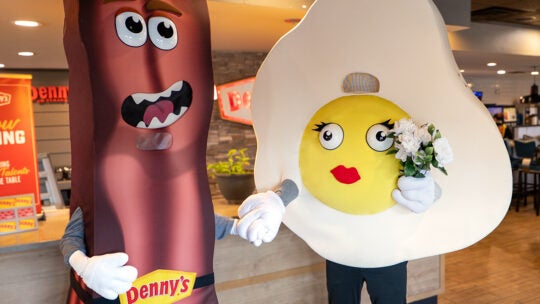
Denny’s is leaning all the way into Valentine’s Day absurdity—with a Vegas twist. On Feb. 14, the diner chain is offering free weddings at its Fremont Street location in Las Vegas, inviting couples to say “I do” at the Denny’s Wedding Chapel for one day only. The catch? Newlyweds must sign a tongue-in-cheek “Toast-nuptial” agreement pledging their devotion to each other—at least until breakfast the next morning. The ceremony package includes a rock ’n’ roll–style officiant, music and a keepsake certificate, turning matrimony into a full-on sunny-side-up moment.
The stunt doesn’t end at the altar. Couples who make it through the night receive an “Over-easy Overnight” kit with branded pajamas, eye masks and pillowcases, and those who post a “just married” breakfast-in-bed photo tagging @DennysDiner can score a free morning meal.
Communication takeaways: This brand experience showcases a playful mix of romance, irony and social-first marketing—positioning Denny’s not just as a late-night staple, but as a cultural participant in Valentine’s Day content chaos. In an era where brands compete for earned attention, Denny’s is betting that humor, spectacle and sharable moments are worth more than a traditional promotion.
Sara Hagen, President of FoodMix Marketing Communications, an independent, full-service food & beverage branding agency, says Denny’s is providing a good example of the right messages to entice customers—without it sounding like marketing.
“What makes the perfect commercial marriage?” Hagen asks. “The brand love equation. Experience plus meaning plus authenticity, equals brand love. In the case of Denny’s, you add in a good laugh, and it lowers resistance. Humor disarms consumers, making brand messages feel less like marketing and more like entertainment or shared culture."
We’ll raise a milkshake to that.
Nicole Schuman is Managing Editor at PRNEWS.