
This week’s PR Roundup explores how trust and accountability are being tested across communications, from AI hallucinations landing in public-facing content to former President George W. Bush’s Substack debut to renewed backlash against Tyra Banks.
PR Teams Are the Most Affected by Public AI mistakes, According to Report
What happened: “AI hallucinated” could be the new “the dog ate my homework” for communicators.
NP Digital released its latest AI Hallucinations & Accuracy Report, which examined how often leading AI tools produce incorrect information and how those errors are impacting marketing and PR workflows.
Based on a survey of marketers and a 600-prompt accuracy test across six major large language models, the report found that AI mistakes are not just theoretical—they’re already making their way into public-facing materials, with PR teams among the most impacted.
Despite these risks, a notable share of marketers continue to rely on AI-generated content without human review, raising concerns about reputational exposure and quality control.
Key data says:
- More than one-third of marketers (36.5%) admit hallucinated or incorrect AI-generated content has already been made public, with PR teams the most affected, followed by content marketing and paid media.
- Despite known hallucinations, 23% of marketers still feel confident using AI outputs without human review.
- In a 600-prompt accuracy test across six leading LLMs, ChatGPT delivered the highest fully correct response rate (but it’s still only 59.7%).
Communication takeaways: Trust is essential for brands and a foundational piece of any PR campaign or message. How can PR pros protect their reputations and prevent these potential mistakes?
Lauren Hill, Vice President and Head of Data & Analytics at PAN, says she’s not surprised at the high percentages of hallucinated content, and similar research from PAN confirms it. After the firm analyzed 11,000-plus links that ChatGPT shared in response to B2B prompts, 31% of those links were revealed to be hallucinated.
“For the past two years, storytellers have been forced to generate more and more and more,” Hill says. “Now, we're seeing the blowback. AI makes mistakes.”
And those mistakes are not invisible to educated consumers. Hill says it’s an opportunity to connect more directly with an audience.
“The rise of AI slop, the hallucinated research and the infinite feed have all turned willing buyers into skeptical scrollers,” Hill notes. “Your audience needs to know the claims you make, the data you cite and the value you offer are grounded in real human experience. They'd rather hear a rough-and-ready anecdote from your CEO than a glossy report from your brand.”
Hill acknowledges that as AI becomes a gatekeeper of brand perception, PR’s role becomes even more critical and active, especially as mistakes become more visible.
“Prioritize high human-led verification standards in your AI governance, and leverage executive thought leadership platforms to showcase the people powering your brand,” she suggests.
A Former President Tries Substack
What happened: Former President Barack Obama tested and excelled on social platforms for years. President Donald Trump started his own platform, Truth Social. However, former President George W. Bush, who is not known for doing many public interviews or a robust social media presence, is one of the first presidents to try out Substack.
Bush published a high-profile essay, which focuses on former President George Washington’s leadership, humility and decision to relinquish power, for a new nonpartisan Substack series called In Pursuit, which is tied to the upcoming 250th anniversary of the nation. While Bush avoided naming current political figures, the timing and themes fueled speculation that the essay provided subtle commentary on today’s political climate and debates over democratic norms.
Communication takeaways: This move underscores Substack’s growing influence beyond journalism and creator communities, positioning it as a mainstream platform for prominent public figures seeking narrative control and unfiltered audience engagement. For Bush, publishing on Substack allows him to bypass traditional media gatekeepers while shaping his legacy through thoughtful, long-form commentary.
For communicators, the moment signals how direct-to-audience channels have increasingly become strategic tools for reputation management, thought leadership and public discourse—even at the highest levels of public life.
Meredith Klein, Substack journalist at Meredith and the Media and communications consultant, says the platform combats misinformation, as it's straight from the source—so Bush needs to be thoughtful and intentional with what he says.
"He should work closely with a communications strategist to identify the stances and positioning he wants to take across major topics and align on when he will—and won’t—comment on national affairs," Klein says.
She also notes that the disadvantage for an everyday person (or in this case, politician) authoring a Substack piece is not having the benefit of a trained newsroom behind them—professionals who know how to report news and drive news, ensure content is backed up with proven data and sourced facts.
"Former President Bush has the connections and resources to bring a smart and savvy team to the his Substack table, ensuring he’s putting out content that’s guided by his core values and political beliefs, while being factually correct," she says.
As for any public figure, their words carry a more significant power and influence than an average author.
"Every piece of content published should be also viewed with an ethical eye, understanding their words will have a ripple effect and impact on readers," Klein says.
ANTM Controversy Finds Tyra Banks Again
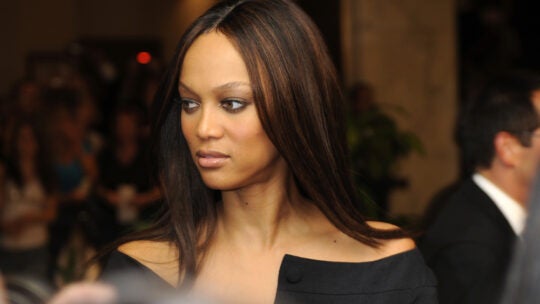
What happened: Netflix’s new three-part documentary, “Reality Check: Inside America’s Next Top Model,” revisits the legacy of the long-running reality series, which has reignited criticism of its creator and host, Tyra Banks. While Banks participates in the documentary, many critics say she comes across poorly, often appearing defensive and reluctant to fully take responsibility for the show’s most controversial moments. Reviews argue she repeatedly frames past decisions as industry norms of the time, rather than acknowledging their harmful impact, particularly around body image, race and emotional abuse.
Media coverage around the series has been anything but forgiving. An article from CBC News says, “Why won’t Tyra Banks take accountability for her missteps on America’s Next Top Model?” A headline from The Cut reads: “Tyra Banks Isn’t Sorry Enough in Reality Check: Inside America’s Next Top Model.” A review from The Guardian states: “Tyra Banks comes across terribly in this exposé.” Overall, there's not a lot of redemption for Banks for her already tarnished reputation.
The series also reexamines a long list of controversies, including extreme makeover challenges, racially insensitive photo shoots and emotionally distressing eliminations that former contestants say caused lasting damage. Participants describe feeling pressured, humiliated and exploited in the name of entertainment, fueling broader conversations about ethics in reality television.
Communication takeaways: Instead of delivering redemption, the documentary has largely reinforced concerns about accountability, dealing a fresh reputational blow to one of reality TV’s most influential figures, Banks.
Alyssa Jewell, Associate Director, PR and Communications at Nickerson, says she’s “honestly shocked” Banks agreed to be in the documentary, because historically, most interviews on this series do not paint her in a good light. She also notes that Banks’s interview in the doc comes across as extremely rehearsed, without any self-blame for what went on in the series.
“For PR pros, it really underscores what an overly rehearsed interview can look like (there’s preparing and then there’s that level when it’s too much),” Jewell says. “I mean, let’s be clear, it’s Tyra, but she comes across as fake—particularly when you compare her to the other, more genuine interviews in the show.”
Jewell also says that adding in the layer of controversies that happened on Top Model, without providing any apology and just offering excuses, adds fuel to the fire.
“They should have been better prepared to talk about what actually happened on that show years later, and they just weren’t,” she says. “[Banks’s] main refrains are that she didn’t have power over editing, or it was a different time, or the viewers wanted it. But at the beginning of the documentary, she says the whole show was her idea.”
Bonus: Former Washington Post Employees Launch Database for Independent Journalists
The Independent Journalism Atlas site launched this week, and it should be of interest to PR professionals. The database serves as a directory, tracking independent journalism creators across platforms, topics and geographies. It serves as a handy reference guide for all of the podcasts, Substacks, Behiiv, YouTube and more that you can dream of. It's a golden media relations tool for the moment.
The three cofounders, Liz Kelly Nelson, Justin Bank and Ryan Y. Kellet, came up as journalists and rose to become media executives across The Washington Post, New York Times, Vox, Gannett, Axios and NPR, overseeing departments like audience development, audio, video, product development and more.
“We watched our industry scale-up as the personalities of our newsrooms built audiences across social and email,” Bank says. “And we've now studied how so many of our friends and peers have been a part of the industry wave towards independence during this era of creator journalism.”
Bank notes that the trend is growing as more traditional publishers slim down to navigate the changing media environment, with creator journalists finding success and building sustainable business with that independence.
The current Atlas holds 1,001 verified names, but they anticipate it growing to tens of thousands and beyond. And they want to know what communicators think.
“We're eager to learn from PR professionals about what they want and need to serve their needs with this new ecosystem,” Bank says. “We've had a few listening sessions and plan more.”
You can sign up to follow the progress of the atlas, as well as give feedback here.
Nicole Schuman is Managing Editor at PRNEWS.