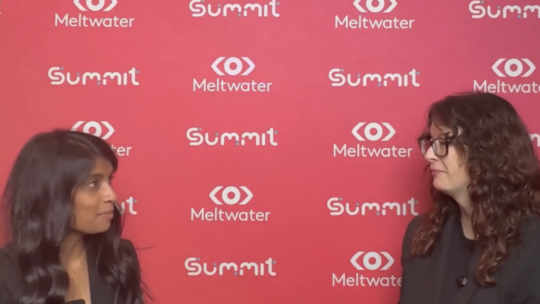
Schuman: How did you get involved with this?
Lakshmin: Yeah, so I'm a journalist at heart. Um, I got my start in entertainment journalism and then I moved into social media by doing social media for newsrooms, and then I had a short stint um at an ad agency. I worked in tech for awhile. But all along I was freelancing. I still was doing travel freelancing as well. Um, and I wrote a couple chapters of the New York City guide book for Lonely Planet—one of their New York City guide books because they've got so many guide books for places all over the world, of course. And then a couple of years later when they were looking for a social media director, um I applied and got the job.
Schuman: That's awesome. What's your favorite part of the job?
Lakshmin: Oh, I mean just the fact that I get to like think about all the amazing places in the world, get to hear about amazing places in the world. I feel like the running joke is that the world is almost our product and it's like who doesn't want to get to explore the world? It's so fun.
Schuman: That's a great thought. The world is your product essentially. And I was going to ask, you did the New York travel books or you know you wrote for some of the travel guides. So what's the one thing, the one place that you would tell somebody they have to go who's never been? Who's never been here?
Lakshmin: I mean, honestly, so many. I know. I think I really think it's touristy, but you've got to do the typical like greatest hits of New York. You just got to do it. There's so much to appreciate and see. Um, you know, Times Square, you got to do it at least once. You gotta go and, you know, go to uh the you have to see the Empire State Building. You have to walk the city. I think the most important thing that you can do if you're visiting New York for the first time is just walk everywhere because you get such a good lay of the land by doing that. And it's such a walkable city. It's how locals do it. We walk everywhere. So, you can really experience a place just by getting some good walking shoes on and going. And that's how I got to know the city when I first moved here. Oh gosh. Oh, almost 13 years ago now.
Schuman: So, that's an official New Yorker. Well, you've worked in media, which is cool, on the journalism side, so you kind of understand what it's like working with PR people, working with pitches, those sorts of things. And there's a lot of PR people here at the summit. Um, so what advice do you have for PR teams that want to tell a really good story?
Lakshmin: Um, I feel like telling a good story as part of your brand and then telling it on social is like another level. Yeah. So, are you talking about specifically on social or just in general?
Schuman: Just in general. I mean, honestly, for social, too.
Lakshmin: I don't know why I asked that. Um, it's just always personal storytelling. So, leaning into the
people and their experience, I think, is really important. And that's what's going to help stick out in like the sea of sameness. It's people's individual stories, their lived experience. that is what's gonna kind of have that staying power because people don't really remember what you know a logo in the way that they remember hey somebody was talking about this like really interesting and powerful thing and that stuck with me and that piece of advice I still refer back to now that that is something that is what real brand halo is because you are helping people share their voices and their experiences and then relate to other people which what could be more human than that?
Schuman: I love that brand Halo That's such a good good saying. Um, which kind of leads me to my next question in terms of, you know, a lot of people do these one-off campaigns, but how do you, you know, go from that to developing a longer term strategy for a campaign like you said, like achieving that brand halo and keeping people in?
Lakshmin: Yeah. I mean, I think the first step is just not even calling it a campaign. Um, because it's something bigger than that. At Lonely Planet, when we thought about developing our creator program, we didn't call it a campaign because it wasn't just a one-time thing in our mind. We wanted to build something that had legs that we knew would last for a long time. And we really started with this first year of thinking of it as a pilot for something bigger. So, I would think about it like what do you want it to be at the end? So, we really worked backwards. We made up a fake press release on week one um and worked backwards from that. So, we had our blue sky press release like how would we announce this big exciting thing to the world. It was full of things that were wildly unrealistic for our budget. But you know what? We needed to get it on paper because we had to say like this is what we wanted to do and it was fun.
Also, it was fun to dream big and kind of just be like what could we do if there were no rules? if there if money wasn't an wasn't part of the fact the equation like what would we do and then we just worked backwards and kind of from there figured out okay this is what we're going to do in the next 3 months 6 months and this is what success looks like one year from now and eventually—spoiler alert— that fake press release eventually became our real press release that we walked back obviously but it was um you know it formed the basis for what ended up being our real press release out to publicists when this launched in March 2026.
Schuman: Well, that's great. So, that's a rather new program for you guys.
Lakshmin: Very new program, but it's been in the works for over a year. So, we took our time. We didn't we did not try to rush to get something out that was halfbaked. Instead, we really thought about what is the foundation for this? How do we get the right people on board? How do we make sure they're trained to represent our brand? And how do we make sure they're being set up for success, not just for the short term, but also a year from now. So, as a result, we have 20 to 30 creators um representing destinations all around the world. We have somebody on every single continent except Antarctica. Um someday...and they're creating anywhere from four to six social first videos for us over the next year. So, that's a huge volume of content. And all of this content is paid. We we established uh net new contracts with them that it's an annual program. Um, and we really get to know them on a long-term basis. It's a it's a close collaboration.
Um, in my panel today, I was talking about how you can't have collaboration without conversation. And that's really what it is. It's been so much back and forth conversation. And that's been really great to help us become better, for them to become better, for us to learn from each other. we can bring the wisdom of over 50 years of travel guidance, and they can bring to us what they're seeing happening in their destinations on the ground because we're not there with them because myself and and the majority of my team are based in New York. So, they pitch their ideas to us and we're able to help amplify them in a way that makes sense for the Lonely Planet brand and and would be interesting to our audience just organically regardless of who it was coming from.
Schuman: Yeah. And it's really interesting because I feel like of the, you know, the
influencer industry. I feel like travel creators and influencers are kind of like the OGs. You know, you have beauty and like travel and those are the people that were doing it first really and sharing photos and sharing videos and just putting the experience out there on social for people to see.
Um, you know, and you guys as a brand have been around for a while. What was the, you know, the reasoning um, behind starting a program like this?
Lakshmin: Oh man. I mean, I had been thinking about it since I started at Lonely Planet almost four years ago. I wanted us to be telling a lot more personal stories on the ground. And in this day and age, that also means making sure we have the visual components for that. And I saw that travel creators were just going out and doing this as it is. And social media has quickly become one of the top sources of travel inspiration.
So, it just seemed like a gap. What wouldn't we be doing this? Why wouldn't we be doing this in a more structured way that enabled us to amplify these already great stories? We have this huge, huge audience and then you have all these talented local and travel creators making these great stories. Why shouldn't we be working with them to help them get that bigger audience as well? Um, it just seems like a win-win and that's what we found even in the short time since we've launched. It's been really great. Um, and it's also been really amazing to see how creators have responded to it. It's just been we've gotten overwhelming positive feedback and that means so much to me. I want us to be a team that creators want to work with just, you know, as much as I'm sure creators want to work uh want to be a creator that brands want to work with, right? So, it's a partnership and that's really how we see it and it's going to evolve and that's why we did it fully inhouse because we knew as we got into things it was going to be, you know, we maybe wouldn't have gotten some things right. We knew we were going to evolve with the creators that we brought on to the program and they would help shape what it would become. So, everyone we brought on were people who understood that mission and felt in alignment with that. And that's also why keeping it in-house was nice because we were able to like move quickly, make decisions. We just like weren't fully sure on exactly how things would go. And this gave us the opportunity to kind of like be nimble and you know really be honest with ourselves on like okay next month what we're doing might look a little bit different and that's okay because we're figuring it out as we go and we're learning as we're going and we're iterating and we're optimizing. So now we have a much clearer picture of of kind of the lay of the land that we did a year ago. But that means progress which is all you can really ask for at the end of the day.
Schuman: Yeah. And one last question. Um, if you're a brand and you're looking to work with creators, what's like your top tip as they go into I know there's a lot involved, but like if you could give them one big tip, what would it be?
Lakshmin: You've got to be on social media and you've got to be scrolling through the type of content that you want on your channel. You have to understand it. You have to understand how creators are
telling those stories rather than just like seeing it on a deck or seeing it like in a thought leadership post or something like that. You've got to actually be in the platform seeing how it's done natively, understanding how those native tools work because if you don't, it's going to be really hard to then have that type of back and forth conversation and collaboration because you're going to be not understanding where the creator is coming from or they won't understand where you're coming from. And that I think goes a long way.
I always say to my team, and we're a small scrappy team. It's myself and two other people that are on the social team full-time in-house at Lonely Planet. It's really that we're all in it. We're all in the comments together. We're all in the weeds posting things.
We're all looking at the different tools and the constantly shifting algorithms. But that's so important because it means we know what's going on and we know how to work with the creators who are coming to us. And when they have an idea, we can say, "Oh, we saw this thing. Oh, we saw that thing." or, oh, we understand what you say when you say like this thing is impossible. Like, we get it. We understand like we're going through something similar. So, we can kind of have that close peer-to-peer relationship in a way that is really fruitful for both our audiences. I think it just helps everybody become ultimately better at what they're doing.
Schuman: Yeah. A mutual respect then between the both of you. Well, thank you so much for your time, Deepa. We appreciate it. I appreciate it.