

This week's PR Roundup examines what it takes to build—and keep—consumer trust in uncertain times. From Morning Consult's latest data showing Americans flocking to familiar brands, to a stark new report on the collapse of local journalism, to Allbirds' dramatic reinvention as an AI company, the throughline is clear: how organizations communicate during moments of change, scrutiny and instability matters.
Morning Consult's Most Trusted Brands 2026: Familiarity Wins in Uncertain Times
What happened: This year's Morning Consult Most Trusted Brands report—drawing on continuous tracking of more than 3,200 brands—finds that in a turbulent political and economic climate, Americans are gravitating toward the familiar. Dawn Dish Soap holds the top spot for the second consecutive year, followed by Band-Aid and Google, which ranks as the most trusted technology brand. The broader pattern is consistent: household staples and childhood favorites dominate.
The biggest trust gainers tell a nostalgia story. Mr. Pibb (yes, Mr. Pibb!) leads all brands with a plus-13.7 point year-over-year jump—fueled by its viral "Mr. Pipp" campaign with former NBA star Scottie Pippen. Lunchables, Cap'n Crunch, Capri Sun, Hot Wheels and Doritos all posted meaningful gains, suggesting that in uncertain times, consumers find comfort in brands that feel like home.
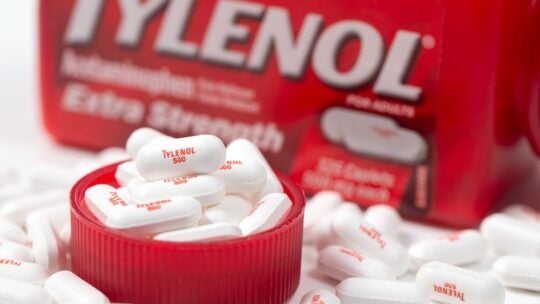
Tylenol's performance stands out for a different reason. Despite becoming the subject of a high-profile political controversy late last year, it remains the single most trusted medicine brand and holds a top-20 overall brand position—a good example of what years of earned trust can do.
One note for communicators: 94% of tracked brands score lower with Gen Z than with the general adult population, with Gen Z's average net trust sitting 8 points below the broader population. For brands banking on nostalgia, that gap is worth watching.
Communication takeaways: Danny Maiello, Chief Corporate Affairs Officer at Mission North, acknowledged that Tylenol's strong brand position showcases a masterclass in trust building, for these three reasons:
- Over the decades, Tylenol has created an emotional bond with consumers. People rely on it, trust it and that reliability is hard to shake.
- The way Tylenol has navigated crises—especially the infamous tampering incident from almost 50 years ago—illustrates the power of transparency. They didn't just react; they communicated openly, reinforcing their commitment to safety and consumer well-being.
- In an age of misinformation, the brand's science-backed responses to health claims have positioned them as a credible source, not just another brand pushing products.
"A strong brand isn't just about market share," Maiello says. "It's about building trust through reliability and transparency."
The Local News Crisis Is Getting Worse. Data Shows What's at Stake
What happened: A new analysis of 4.2 million articles by Muck Rack and Rebuild Local News finds that most U.S. counties saw no local education or health coverage in the first three months of 2026. The 2026 Local Journalist Index, which draws on journalist-level data across digital, broadcast, print and social media, paints a stark picture of a journalism ecosystem in continued decline.
Key findings:
- 81% decline in local journalists since 2002—from roughly 40 Local Journalist Equivalents per 100,000 residents to just 7.8 today
- 70% of U.S. counties—home to an estimated 209 million people—fall below the already-low national average for local journalist density
- 76% of counties had no local health coverage; the same pattern holds for environment (77%) and transportation (82%)
- $1.1 billion in estimated annual financial harm to communities—states with fewer local journalists face municipal borrowing costs roughly 17% higher than average
- Crime coverage crowding: in counties with fewer than five journalists per 100,000 residents, nearly one in five local articles covers crime—roughly 50% more than in higher-density counties
"The shortage of local reporters remains so severe that communities are being left in the dark as coverage of education, healthcare and core civic issues thins out or disappears altogether," says Steven Waldman, founder and president of Rebuild Local News.
Communication takeaways: PR pros take heed: as local news ecosystems shrink, the traditional pathways for reaching community-level audiences—earned media, local beat reporters, community coverage—are narrowing. Brands and organizations that once relied on local press to tell their stories will need to think differently about how they reach and inform the communities they serve.
Greg Galant, Muck Rack cofounder and CEO, says the study reinforces what journalists told Muck Rack in its State of Journalism report earlier this year.
"Lack of funding remains one of the top concerns facing journalists, yet only 16% of them say the pitches they receive usually reflect the communities their outlets serve," Galant says. "For PR professionals serving organizations that play an important role in their communities—whether it's a hospital, school system or nonprofit—there's an opportunity to better connect their expertise and information to the issues people care about locally."
Galant also noted that journalists are just looking for stories that matter to their audiences, and that's where PR pros can help.
"The more communicators can provide local context and demonstrate community impact, the more useful they become as a resource," he says.
From Sneakers to AI: Allbirds Is Now Smartbird
What happened: Allbirds, the once-ubiquitous footwear brand worn by many a tech worker, has rebranded as Smartbird. The transformation completes a pivot that began earlier this year: the company sold all its shoe-related assets to American Exchange Group for $39 million in March, then announced in April its "long-term vision to become a fully integrated GPU-as-a-Service and AI-native cloud solutions provider."
The rebrand follows the completed shoe-product sale and reflects the company's shift to providing AI infrastructure as a managed service. Smartbird simultaneously doubled its financing from $50 million to $100 million to support its AI infrastructure buildout. The stock surged nearly 600% after the initial pivot announcement in April and jumped another 30% on the rebrand news.
Communication takeaways: This story raises questions that go beyond the business strategy. The speed and completeness of the brand abandonment—a name, an identity and a loyal consumer fanbase built over a decade—in favor of a sector the company had no prior experience in is a study in reputational risk as much as opportunity. Whether Smartbird can build credibility in a crowded AI market from scratch, or whether the pivot reads as opportunistic, will likely be answered in sales rather than announcements.
Nikki Balles, Co-Founder of The Brand House, says a new name can signal a new chapter, but that alone doesn't change perception.
"The brands that succeed don't try to distance themselves from their history," Balles says. "They reframe it and build upon it because you don't communicate people out of an old perception, you earn a new one."
And Kalina Davis, also Co-Founder of The Brand House, says transformations of this scale are rare because of the time companies spend building recognition and trust around what they do.
"The biggest communications challenge isn't getting people to understand that a company changed, it's getting them to believe the change was a natural next step," she says. "Netflix didn't become known as the company that left DVDs behind, it became the company redefining how people experience entertainment. Amazon wasn't remembered as a bookstore that moved away from books, it became known as a company using technology and infrastructure to change the way people access almost everything."
Nicole Schuman is Managing Editor at PRNEWS.